Emergency Numbers in Japan
Shortcuts:
🚑 119 – Ambulance and Fire Department
Number 119 is used to call:
- an ambulance (救急車 – Kyūkyūsha)
- a fire truck (消防車 – Shōbōsha)
After connecting, the operator will first ask:
- Do you need an ambulance or a fire truck?
- Where are you located?
- What happened?
- Is anyone injured?
- How many people are injured?
Good to know
- The ambulance service is free of charge.
- You do not pay for the ambulance transport itself.
- Medical treatment at the hospital is charged according to your insurance coverage.
- In larger cities, it is often possible to receive assistance in English.
English-speaking hospitals, additional numbers, and useful links
- Doctors, hospitals, and dental clinics with English support in Japan (Kyoto)
- A website listing medical institutions with English support and other languages throughout Japan
- Tokyo Medical Information Service (hotline: 03-5285-8181)
- Medicine search tool in Japan
📞 Japan Visitor Hotline – a 24-hour helpline providing assistance to tourists in case of emergencies
- Call (inside Japan): 050-3816-2787
- Call (outside of Japan): +81-50-3816-2787
🚓 110 – Police
Number 110 is used to contact:
- Reporting crimes
- Traffic accidents
- Robberies or assaults
- Aggressive behavior or threats
- Missing persons
- Other situations requiring police intervention
The operator will ask:
- Where are you located?
- What happened?
- Is the offender still at the scene?
- Is anyone injured?
When to call 119?
Examples:
✔ Loss of consciousness
✔ Severe chest pain
✔ Difficulty breathing
✔ Serious accident
✔ Severe fracture
✔ Stroke
✔ Burns
✔ Poisoning
✔ Fire
When to call 110?
Examples:
✔ Burglary
✔ Assault
✔ Car accident
✔ Aggressive person
✔ Finding a suspicious object
Does the operator speak English?
It depends on the region, but in most cases, the operator can transfer you to an English-speaking operator.
How to say in Japanese
Ambulance
救急車をお願いします。
Kyūkyūsha o onegaishimasu.
I need an ambulance.
Fire department
火事です。
Kaji desu.
There is a fire.
Police
警察をお願いします。
Keisatsu o onegaishimasu.
Police, please.
If you do not know the address
The operator will need to know your location.
You can provide:
- the name of your hotel
- the name of a train station
- the name of a temple
- the name of a restaurant
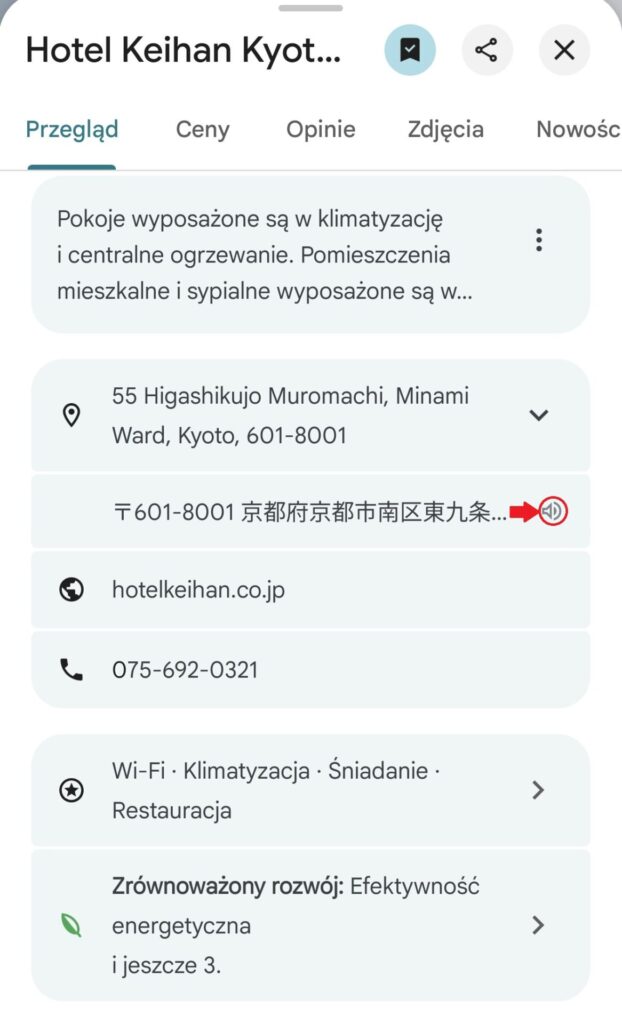
- the address from Google Maps
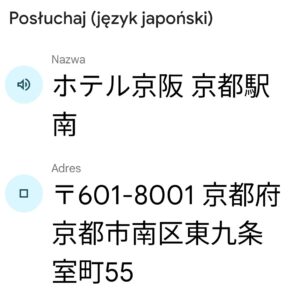
The best option is to open Google Maps and read out the address.
(If you are with another person, one of you can open Google Maps, tap the speaker icon, and Google Maps will read the address aloud for you.)
What to do if you lose your passport?
- Report it to the police (preferably at the nearest police box – 交番 Kōban).
- Obtain a report confirmation (you will receive a receipt with the report reference number).
- Contact your embassy or consulate.
- Apply for an emergency temporary passport.
What to do if you lose your wallet?
Japan has one of the highest lost-and-found return rates in the world.
First, it is worth:
- Return to the place where you lost it
- Ask the staff for assistance
- Visit the nearest Kōban (police box)
Kōban – small police boxes
There are thousands of small police boxes throughout Japan.
You can:
- report lost items
- ask for directions
- request assistance
- report a crime
- receive help in emergency situations
For tourists, visiting a Kōban is often faster and more convenient than calling 110.
J-Alert – Japan’s Nationwide Warning System
Japan has a nationwide emergency warning system.
You may receive alerts regarding:
- earthquakes
- tsunamis
- typhoons
- volcanic eruptions
- other potential threats
Notifications appear automatically on most mobile phones in Japan and are also broadcast through public loudspeakers.
Useful Apps to Have
- Google Maps – allows you to quickly share your location with emergency services.
- Google Translate – helps with communication with medical staff or police officers.
Practical Tips
- Always carry your passport with you.
- If you have allergies or medical conditions, prepare this information in Japanese and keep it somewhere easily accessible. (A ready-to-print template with a list of allergens will be available soon on our website.)
- Save your hotel address in Japanese. This will make it easier to call for help and return to your accommodation.
- Purchase travel insurance that covers medical expenses.
- If you do not speak Japanese, start the conversation by saying: “English, please.” If possible, the operator will connect you with an interpreter.
- For less urgent health issues (such as fever or a sore throat), do not call an ambulance. Visit the nearest clinic or hospital instead. Ambulances in Japan are mainly intended for emergencies requiring immediate medical assistance.
Knowing these emergency numbers and procedures can make it much easier to respond in unexpected situations and help make your trip to Japan safer.
If you want to travel around Japan without stress, we also offer personalized travel plans, ready-made Kansai itineraries, and private tours with a Polish-speaking guide in Kyoto, Osaka, Nara, Uji, Kobe, and Himeji. We can help you plan your route, choose attractions, recommend trusted restaurants and accommodations, and prepare an itinerary tailored to your budget and interests.
We regularly publish new travel guides and tips about Japan, so it is worth bookmarking our website and checking it before your next trip.